Dynamic DNA methylation changes during colorectal oncogenesis with insights from adenoma stages
ABSTRACT
BACKGROUND
The dynamics of colorectal epigenetics within the adenoma stages of oncogenesis remain undocumented. In this study, we investigated DNA methylation dynamics in colorectal cancer oncogenesis from non-tumor colon tissue to low-grade, high-grade adenoma and adenocarcinoma.
METHODS
The methylome of 12 low-grade and 19 high-grade colorectal adenomas was determined via the EPIC v1 Human Methylation BeadChip. These methylation profiles were complemented with the methylomes of 206 non-tumor colon and 22 colon adenocarcinoma samples from the GEO and TCGA databases. Differentially methylated CpGs were identified via Student's t test and used to monitor the evolution of the colon methylome during oncogenesis. The differentially methylated promoters were used to infer the associated biological process via gene ontology and the evolution of the methylation of 34 described colorectal cancer DNA methylation biomarkers was explored.
RESULTS
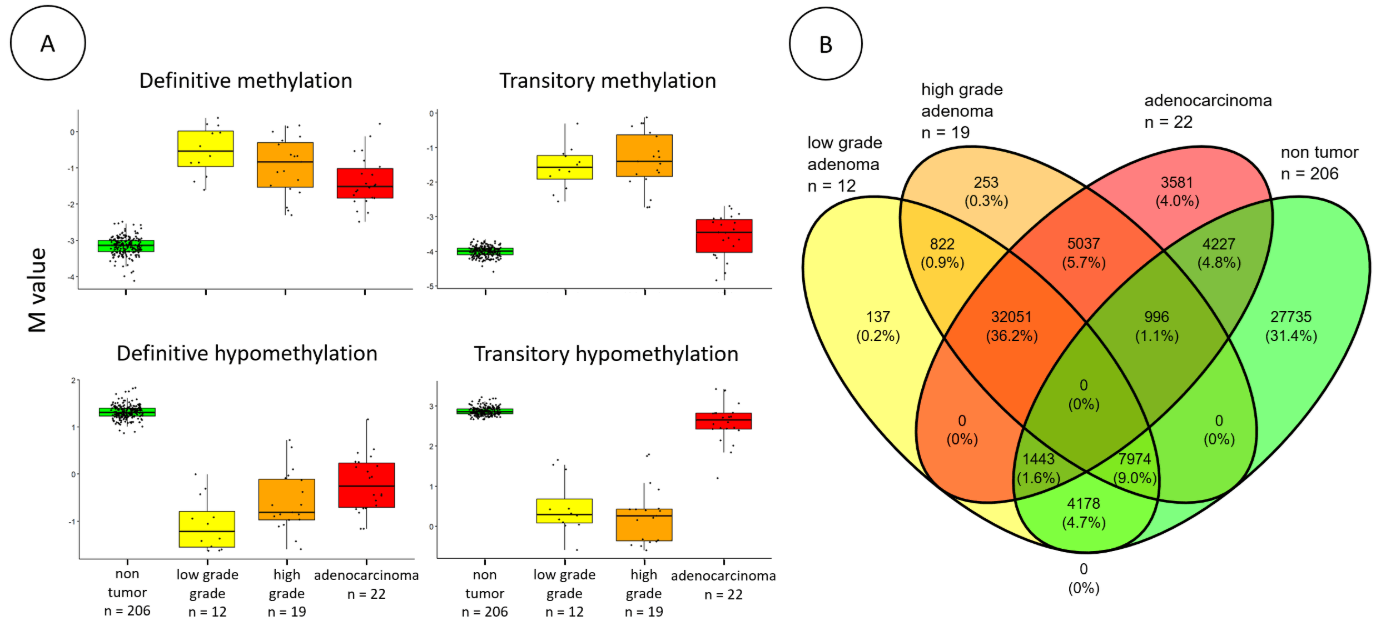
A total of 11.9% of the colon methylome was significantly altered (q < 10-4) during oncogenesis, with half corresponding to DNA demethylation. Of which, 67.4% occurred during the transition from non- tumor colon tissue to low-grade adenoma. A total of 9% of the DNA methylation changes were specific to low-grade and/or high-grade adenomas. The biological pathways related to the sensory perception of odor and stimulus were hypomethylated early, nucleic acid metabolic process were methylated early, post-transcriptional regulation were transiently hypomethylated and mitotic cell cycle were transiently methylated. Twenty-one out of 34 the biomarkers were methylated in low- grade adenomas and 11 out of 34 in high-grade adenomas. This suggests that they could be used to distinguish stages of oncogenesis.
CONCLUSION This study provides insight into the dynamics of colonic epigenetics during oncogenesis, with early DNA methylation changes in low-grade adenomas associated with transient DNA methylation changes. However, the causality of these changes remains to be elucidated. This study also explores the evolution of known biomarkers and their clinical applications for indirectly asserting the tumor’s stage.